

Dynamic pricing simply means your price follows demand. When more people want to stay on a given night, the price goes up; when fewer do, it comes down. Airlines have worked this way since the 1980s, and today most guests expect it. The question is no longer whether to price dynamically, but how to do it without losing control.
Why One Price Leaves Money on the Table
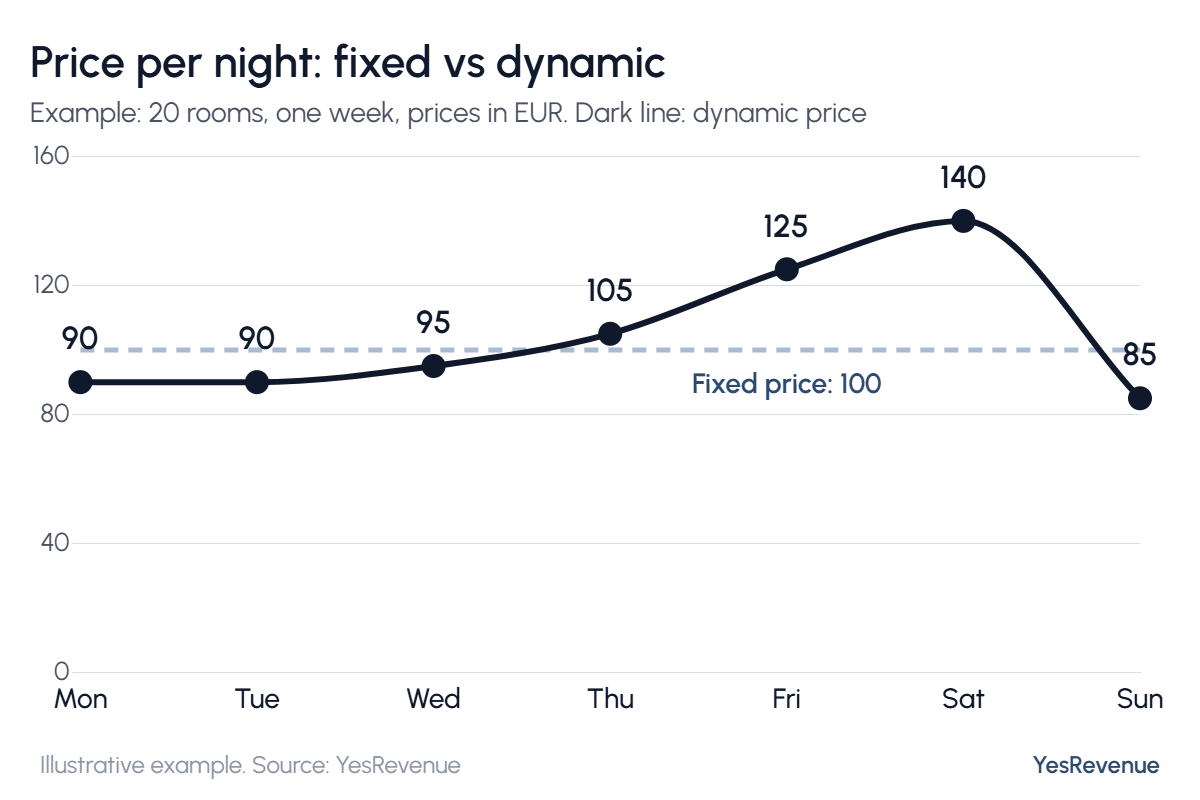
Imagine a 20-room property that charges 100 EUR every night of the week. Midweek it sells 10 to 15 rooms. On Friday and Saturday it sells out, and still has to turn guests away.
That fixed price is wrong twice. It is too high on Monday, when a slightly lower rate would have filled a few more rooms, and too low on Saturday, when every room was gone weeks ahead and the last guests would happily have paid more.
| Example week | Fixed price | Dynamic price |
|---|---|---|
| Room nights sold | 97 | 104 |
| Occupancy | 69.3% | 74.3% |
| ADR | 100.0 EUR | 108.7 EUR |
| Room revenue | 9.7k EUR | 11.3k EUR |
| RevPAR | 69.3 EUR | 80.8 EUR |
In the dynamic week the property sells 7 more room nights and brings in about 16% more room revenue from exactly the same rooms. Weekday rates came down a little; weekend rates went up a lot.
What Moves the Price
A dynamic price is not a random price. It reacts to a handful of signals:
- Demand on the books. How full you already are for a date, compared with where you usually are at the same point.
- Pickup. How many new bookings came in over the last few days, and for which dates.
- Seasonality and day of week. The patterns your own history shows, year after year.
- Events. Concerts, trade fairs, holidays and school breaks: anything that brings people to town.
- Competitors. Where similar properties are priced, and whether they are filling up.
- Lead time. How far ahead the date is. Selling out three months early usually means the price was too low.
Rules That Keep It Under Control
Dynamic does not mean unlimited. Good pricing runs inside a frame you set once and then review:
- A floor. The lowest rate you will ever sell a room for, so a quiet week never turns into a fire sale.
- Sensible steps between room types. A suite should always cost more than a double, by an amount that makes sense to the guest.
- Minimum stays on peak nights. They stop your best dates from being broken up by one-night stays.
- A rhythm. A good pricing system updates prices several times a day; a revenue manager still supervises it and steers prices towards the targets.
One thing we never do is soften a strong night to make the calendar look smoother. If Saturday sells at 300 and Sunday at 60, a cheaper Saturday does not help Sunday. A minimum stay or a weekend offer does. More on that in The Most Common Revenue Management Mistake.
Software or a Person?
Pricing tools are good at the repetitive part: watching the calendar, collecting competitor rates, pushing changes to every channel. What they cannot know is that a wedding party just asked for your whole house next June, that the road to your village closes for repairs in April, or that a new hotel is opening across the street. The best results come from a system that does the legwork and a person who makes the calls.
If you are new to this, start simple: three or four price levels per room type, a clear floor and a weekly look at what is on the books. You can get more sophisticated once you see how your guests respond.
Not sure whether your prices follow demand? Book a free Performance Assessment Call and we will look at your calendar together.